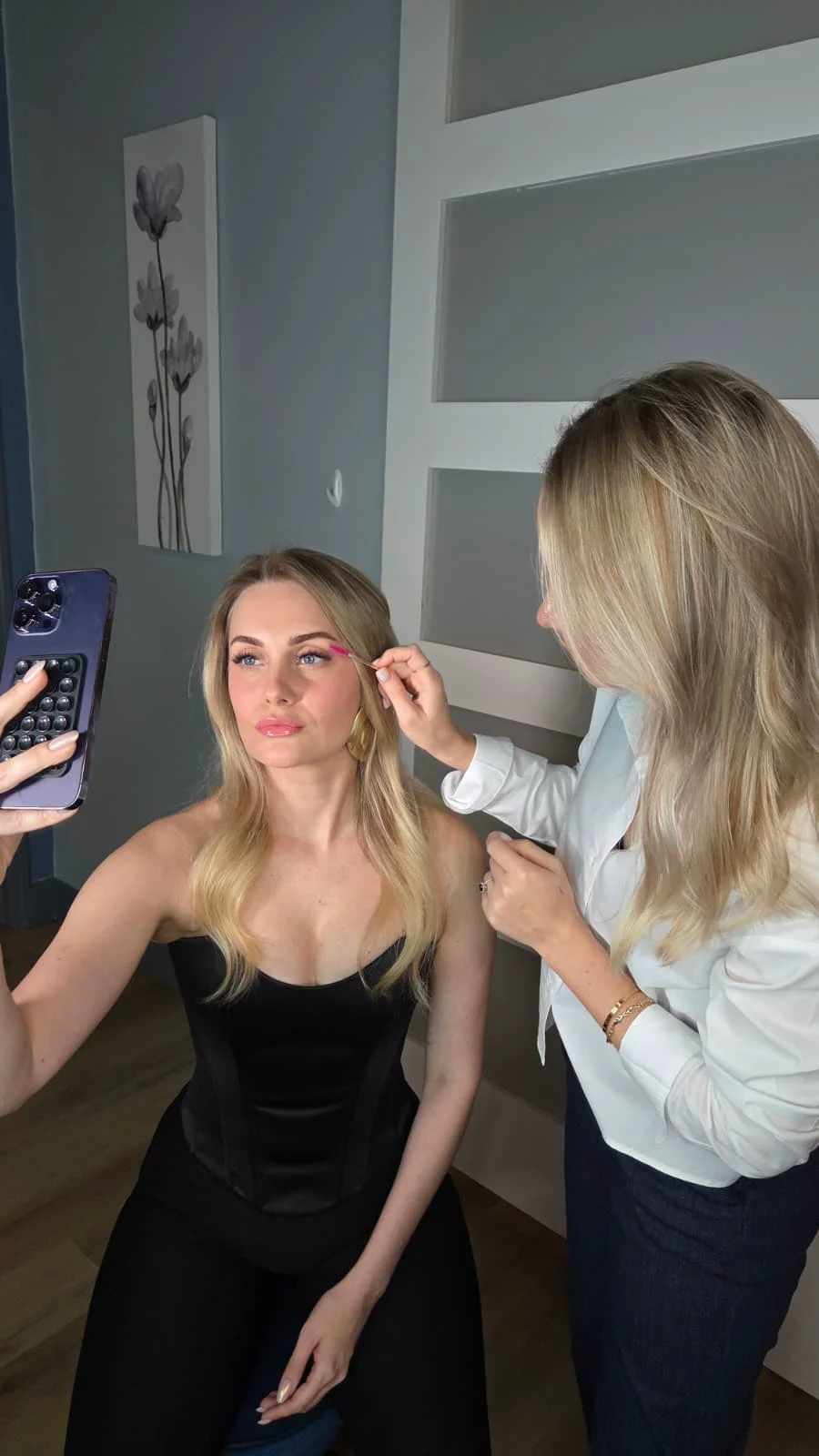
Your friend got lash extensions and looked incredible. You tried, and your eyes watered for three hours, turned pink the next morning, and itched for a week. You assumed lashes were not for you. You might be right, but more often than not, the issue is the adhesive, not the entire concept of extensions.
Lash sensitivity is one of the most misunderstood topics in this industry. We see people in our Fort Myers studio every month who were told they "can't have lashes" by a previous artist, and we put them in a sensitive set that holds for three weeks with zero reaction. Often that starts with a Light Classic set, our softest option, which uses the fewest extensions and puts the least load on each natural lash. Here is what is actually going on.
What this post covers
- The difference between irritation and a true allergy
- What is actually in standard lash adhesive and why it stings some people
- Sensitive and hypoallergenic alternatives that actually work
- What to expect from a patch test and how to advocate for one
Irritation vs. Allergy
An irritation reaction happens during application. Your eyes water from adhesive fumes, especially if your artist is using a fast-cure adhesive in a small room. Symptoms last a few hours and resolve. This is uncomfortable but not dangerous, and it does not get worse with repeated exposure.
A true allergy is different. It develops over hours or days, presents with redness, swelling, persistent itching, sometimes flaky skin around the eye. It does get worse with repeated exposure, which is why some people do their second or third set fine, then suddenly react badly to the fourth.
If you have ever had a true allergic reaction (not just watering), tell every future artist before they pick up a tweezer. Bring photos if you have them. The protocol changes completely.
What Is Actually in Lash Adhesive
The active ingredient in almost every professional lash adhesive is cyanoacrylate, the same family as super glue. Standard formulas use methyl, ethyl, or butyl cyanoacrylate. Some people are sensitive to one type but not the others, which is why a switch in adhesive can solve problems that seem permanent.
Most adhesives also contain carbon black for color and a small amount of a stabilizer like hydroquinone. Carbon black sensitivities are rare but real, and a clear or white adhesive can be a workaround for stubborn cases.
Fumes are the other half of the equation. Faster cure adhesives release more fumes during application. A slower cure adhesive (sometimes called "sensitive") releases less, which dramatically reduces watering and irritation during the appointment, even for people without allergies.
Sensitive Adhesive and Hypoallergenic Options
Sensitive adhesives are slower-curing formulations designed for low-fume application. They give the artist more working time and reduce eye watering by a noticeable amount. Retention with a sensitive adhesive is sometimes a little shorter than standard, maybe 2 to 3 weeks instead of 3 to 4, but the trade-off is usually worth it for sensitive clients.
"Hypoallergenic" lash adhesive is sometimes a marketing term and sometimes a real product. Genuine hypoallergenic options use butyl-based formulas instead of ethyl, which a subset of allergic clients tolerate. Ask your artist directly what type of cyanoacrylate they use and whether they offer alternatives.
For some clients, no adhesive will work, and that is when alternatives become the answer. A lash lift and tint uses no adhesive at all and gives you 6 to 8 weeks of curl and color on your natural lashes. We have several long-time clients who tried extensions, struggled, and found their forever look in lash lifts.
Have a question we can answer?
Drop your name and number. We will text you back from our Fort Myers studio with honest, no-pressure advice for your situation.
What to Expect From a Patch Test
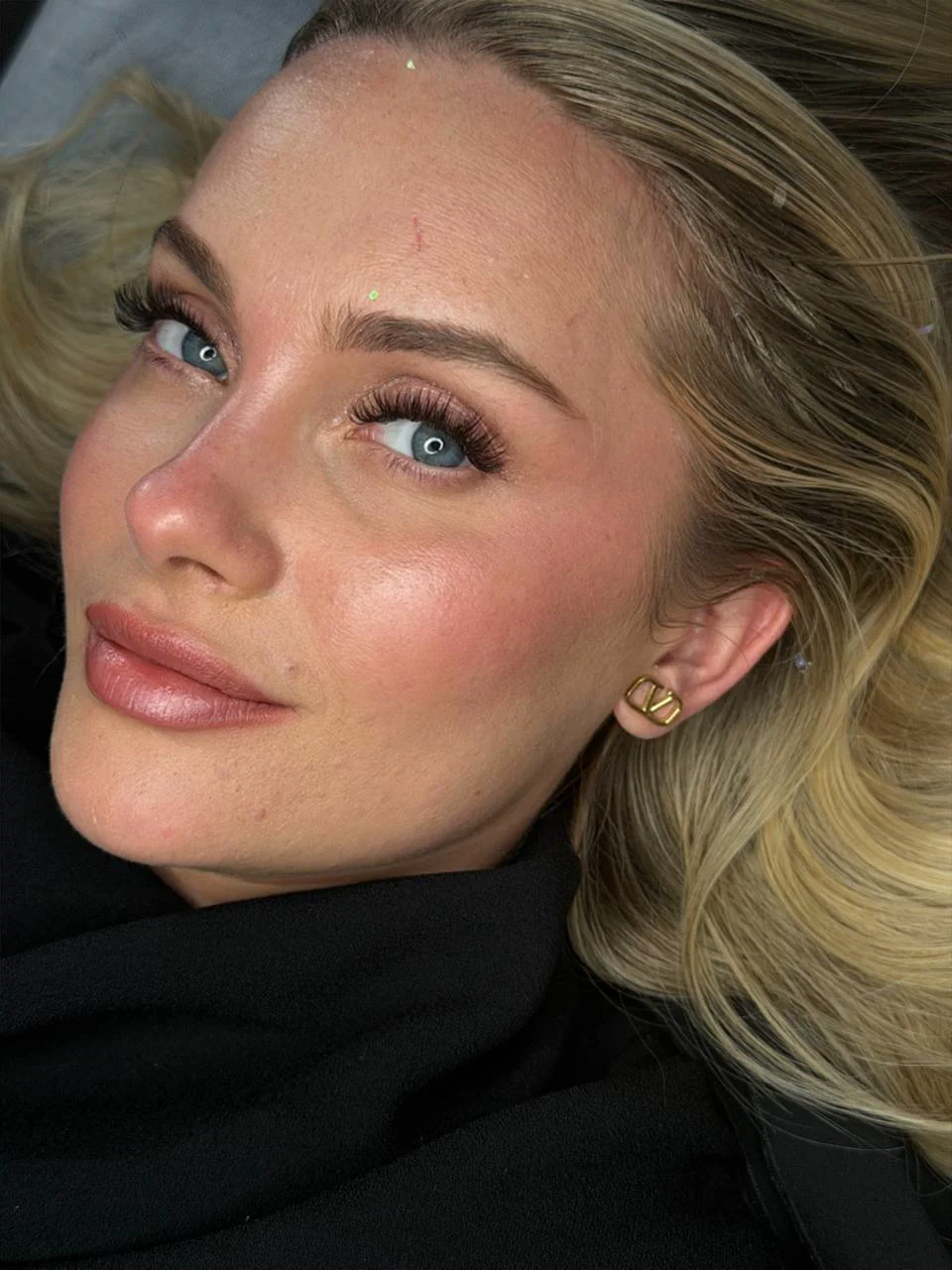
A patch test places a few extensions on the outer corners of one eye, with the same adhesive that would be used for a full set. You wear them for 24 to 48 hours and watch for any reaction. We always offer this free for sensitive clients, and we recommend it for anyone whose history is unclear.
If the patch test goes well, we proceed with the full appointment with confidence. If it triggers any reaction, we know exactly what to change before committing to a full set.
Some salons skip patch tests because they feel like a hassle, but they take 5 minutes of application time and prevent a really bad week. If a salon refuses or pushes back when you ask, that is your sign to go elsewhere. Any artist worth booking will say yes immediately.
If You Are Having a Reaction Right Now
Mild irritation: cool compress, lubricating drops (not redness-reducing drops), no makeup, no rubbing. It usually settles in 24 to 48 hours. If it does not, you have moved past irritation.
Active allergic reaction: stop applying anything. Call your artist and let them know what is happening. Most artists, including us, will remove the lashes for free if it is a true allergy. The longer the lashes stay on during a reaction, the worse it gets, so do not wait it out hoping it improves.
If you have any swelling, vision changes, or pain, see an urgent care or your eye doctor. Severe allergic reactions to lash adhesive are rare but serious, and we always recommend medical evaluation over toughing it out.
Building a Long-Term Relationship With a Sensitive-Friendly Studio
Once you find a studio that handles your sensitivity well, stay with them. We keep notes on every sensitive client: which adhesive worked, the cure time used, the room ventilation setup, the under-eye prep that helped. The second appointment goes faster and feels better because the system is already dialed in.
Tell us about anything that changes. New medications, pregnancy, hormonal shifts, allergy season flare-ups: all of these can change how your eyes respond to adhesive. A 2-minute conversation at the start of your appointment lets us adjust before there is a problem.
Sensitive eyes are not a sentence. They just mean you need an artist who actually wants to solve the puzzle. Reach out anytime and we will walk through your history before you book.
Building a Plan With a Sensitive-Friendly Artist
The first appointment with a new artist if you are sensitive should always be longer than usual. Block 15 to 30 extra minutes for a careful walk-through of your history, a real patch test discussion, and slow application with breaks if you need them.
Bring notes. The adhesive brand from past sets, what reactions you had and how long they lasted, what soothed them, what made them worse. The more specific you are, the better an artist can plan around it.
If you have ever ended up in urgent care, lead with that. Severe reactions change protocol completely. We will likely recommend a deeper patch test (more lashes, longer wear) before any full appointment, and we will use the most conservative adhesive in our kit.
Sensitivity does not have to mean a lifetime of mascara. It just means slower, more careful, more communication. The right artist will treat your sensitivity as a puzzle to solve, not a reason to push you out of the chair.